

Children in Kindergarten thru 8th grade in the towns of Chatham, Harwich, Orleans, Eastham, Wellfleet, Truro and Provincetown are eligible to play for Lower Cape Lacrosse.
Boys/ Coed Lacrosse
What Will My Child Need to Play?
Players will need full protective gear for boys/coed lacrosse.
This includes: helmet, chest protector, gloves, elbow pads, stick and a mouthguard (cleats are recommended).
Each player will also need a valid USA Lacrosse number - see the link below to be taken to the USA Lacrosse website.
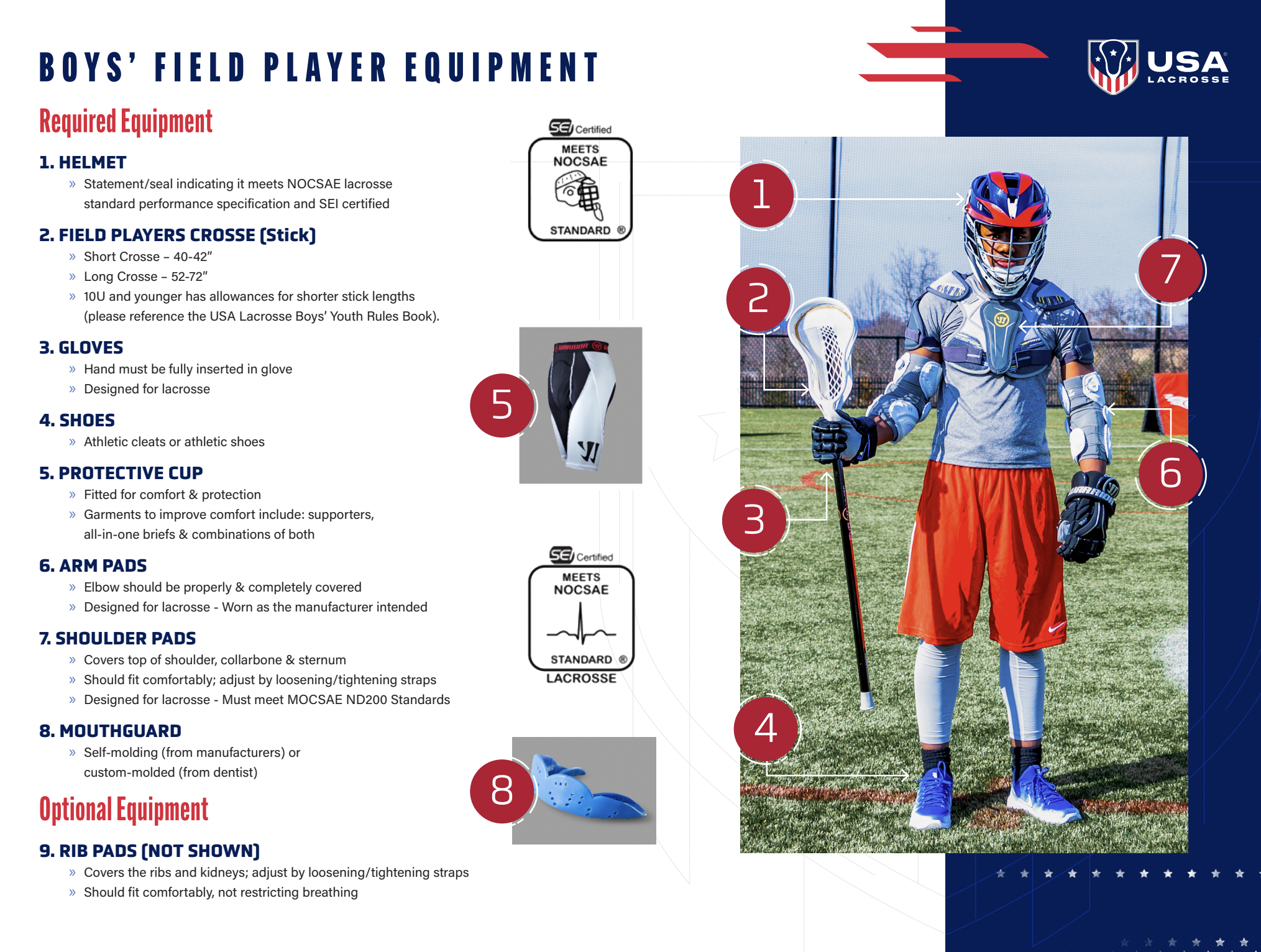
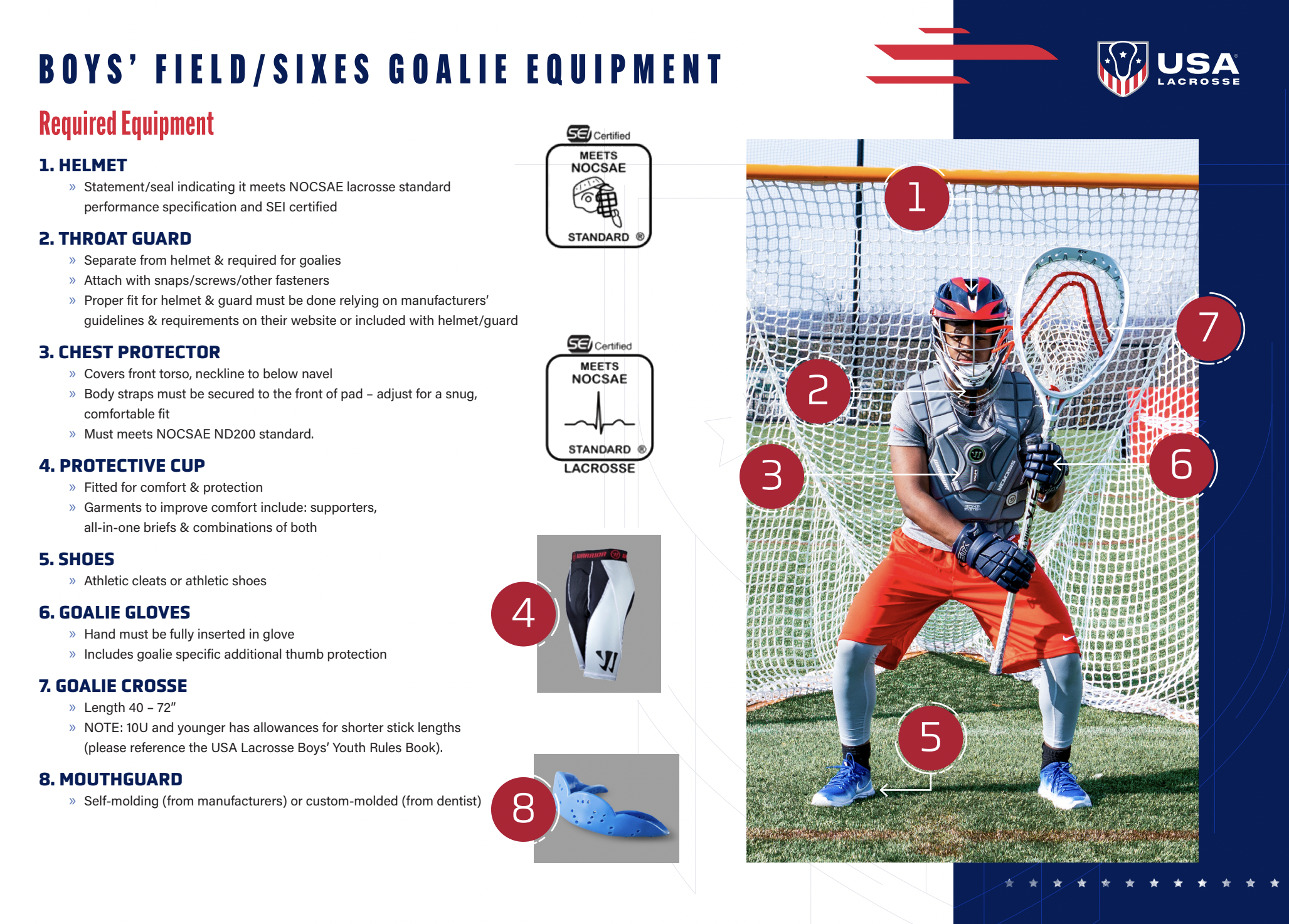
WHERE CAN I BUY MY CHILD EQUIPMENT?
You can find great starter sets for your lacrosse player at stores like Dick’s Sporting Goods, Lacrosse Unlimited, and Lax.com. Below is a link to an example:
WANT TO SEE A GREAT EXAMPLE OF WHAT the MEN’S LACROSSE game LOOKS LIKE?
Watch this video of the 2024 NCAA Men’s D1 Semifinals between Maryland and Virginia. Youth lacrosse teaches the fundamentals of this game and sets our young athletes up to achieve whatever level of play they dream of!
What is the Difference Between Girls and Boys/Coed Lacrosse?
We know you're probably wondering... what's the difference between girls and boys lacrosse? Isn't it the same game? The short answer is: everything is different!
Both have a lot in common- they are fast and intense games that rely on stamina and hand-eye coordination. The main objective of both is identical – to get the ball in the net as many times as you can. That said, there are significant differences between the two games that affect the style of play and the type of gear that your child will need.
Checking v. No Checking
When it comes to gear, here’s the most important differentiator: boys/coed lacrosse allows checking, while the girls' game doesn’t. This means that while there are rules that penalize especially violent checking, checking is part of the game and carries a risk of injury which is why protective gear is mandated for boys/coed lacrosse. In women’s lacrosse, any kind of body checks or stick checks that hit the player will result in a penalty, so the gear requirements are significantly smaller.
Playing Field & Roster Size Difference
Boys/Coed lacrosse typically has 10 players on the field – three at each of the field positions of attacker, midfielder and defense; and one goalie. The girls game has 12 players: 5 offensive players (first home, second home and third home, as well as 2 attackers); 6 defensive (center, point, cover point and third man, along with 2 wings); and the goalie. Girls lacrosse has a larger standard playing area – a 120x70-yard surface, as opposed to the 110x60-yard fields that men play on. In some cases women may play on a field up to 140 yards long – thirty yards longer than a standard men’s field.
Stick Differences
There’s also a difference in the sticks the players use. Boys/Coed can use either a short stick (40–42”) or a long pole (52–72”), while girls’ sticks range from 35.5” to 43.25”. Girls’ lacrosse stick heads also have less of a pocket compared to what the boys/coed use, which makes cradling, throwing, and shooting more distinct.
Game Play Differences
Both games have different sets of rules. Think about likening field hockey to ice hockey. These distinctions make an impact on the two games and establish them as noticeably different, but both contain the same elements of what makes lacrosse great.
Want to get involved?
JOIN US on the Board of Directors or Sign up to volunteer
Lower Cape Lacrosse runs smoothly thanks to dedicated parents/guardians who volunteer their time to help with the behind the scenes work. If you would like to join our Board, please reach out to us!
We are also looking for parent & community volunteers to help coach our youth lacrosse players, to help set up before home games, and to help coordinate team bonding events.